
What Repairs Should I Make Before Selling?
Not every repair is worth the time and money. Here's how to focus on what actually matters to Portland buyers—and skip the rest.
Every seller wants the same thing: the best possible price with the least amount of stress. But what actually determines what buyers will pay?
It's not luck. It's how your home compares to everything else a buyer can purchase with the same money—and with more inventory to choose from, today's buyers are taking their time.
Read on to learn which repairs you should make before selling.
How to Think About Repairs
When deciding what to fix before selling, you're balancing three factors:
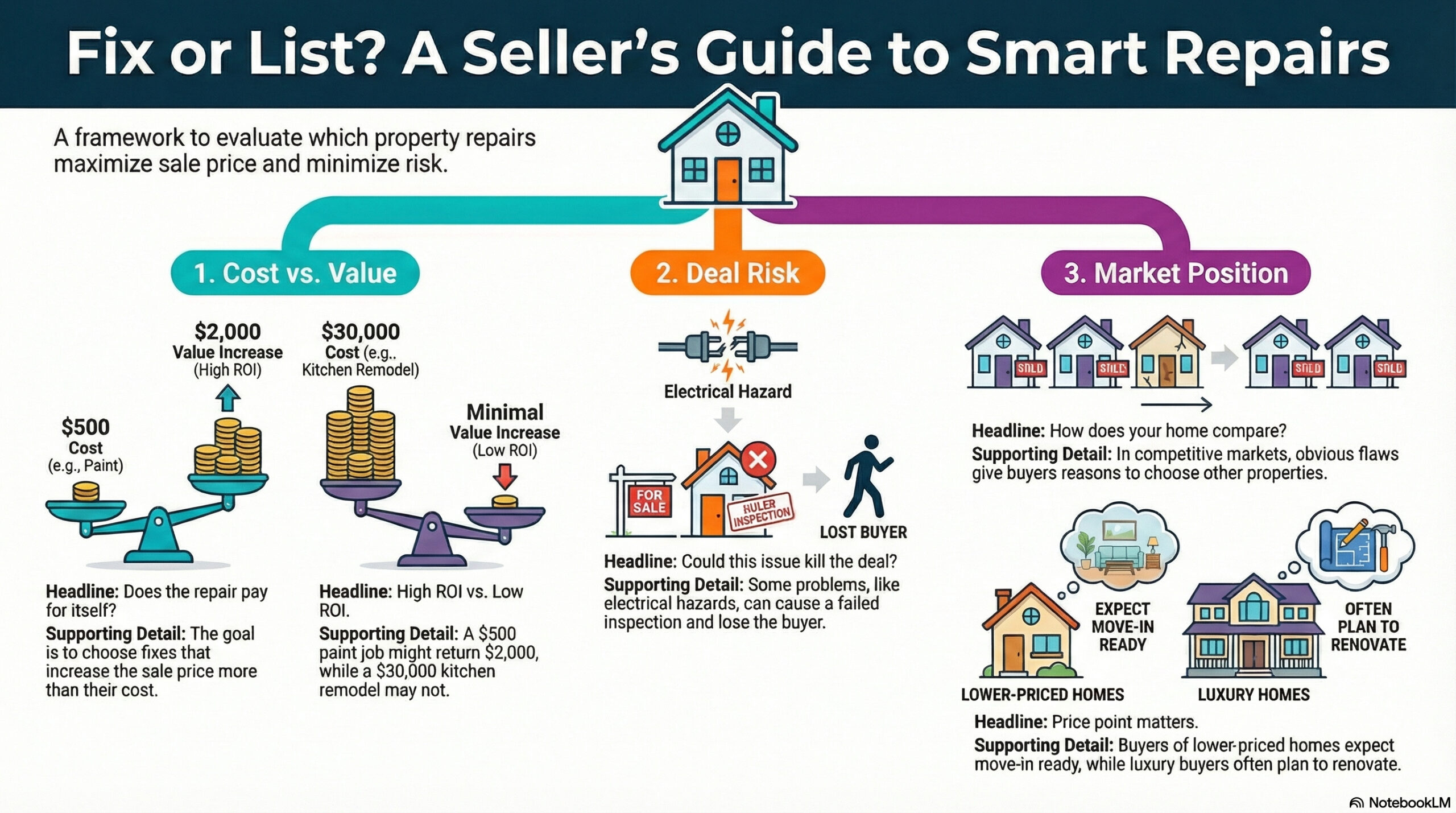
Cost vs Value
Will this repair increase your sale price more than it costs? A $500 paint job might return $2,000 in final sale price. A $30,000 kitchen remodel probably won't.
Deal Risk
Could this issue derail your sale or kill a buyer's financing? A failed inspection because of electrical hazards or a bad roof can cost you the entire deal—not just a price reduction.
Market Position
How competitive is your price range? As a general rule home buyers – especially first time buyers – have limited resources. They simply can’t afford major repairs after closing. If you're in this price range be aware that buyers, with limited resources, prefer homes that are move in ready. Homes priced at $700k+ have more flexibility—buyers in this price range may have the ability to renovate after closing.
"Not every repair make financial sense.
Some are best addressed through pricing or negotiation. Next, let's look at the priorities "
Critical Repairs that Affect Your Sale --- Fix Before Listing
These issues can derail financing, scare off buyers, or create negotiation nightmares.
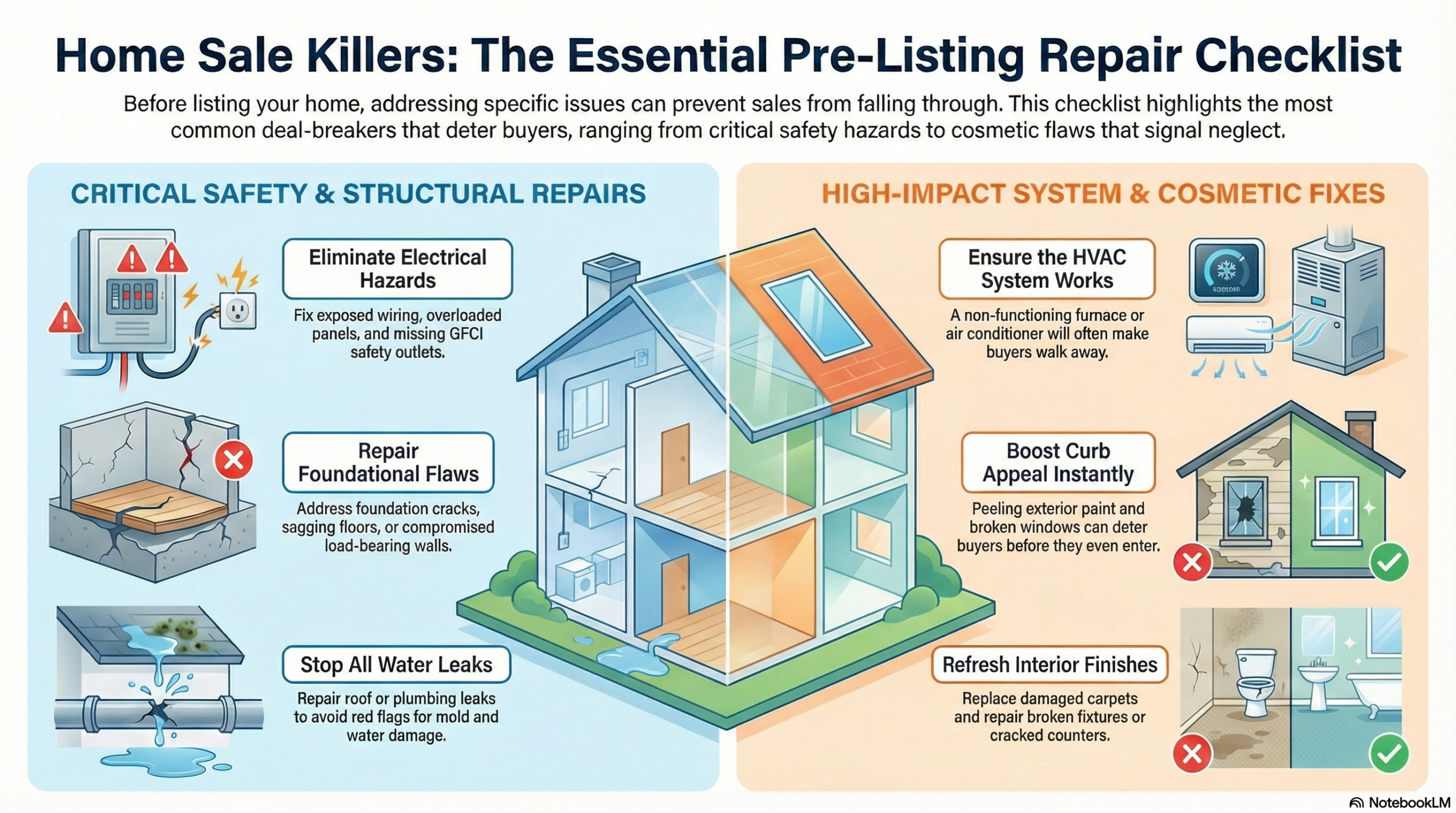
Safety Issues
- Electrical hazards - Exposed wiring, overloaded panels, missing GFCI outlets in kitchens/bathrooms
- Structural concerns - Foundation cracks, sagging floors, compromised load-bearing walls
- Code violations - Issues flagged during pre-listing inspection that could prevent closing
Obvious Deffered Maintenance
- Leaking roof - Water stains on ceilings are instant red flags. Even minor leaks need attention.
- Non-functioning HVAC - Buyers won't negotiate on a dead furnace—they'll walk
- Plumbing leaks - Active leaks or water damage raise mold concerns and kill deals
- Broken windows or doors - Security and weatherproofing issues
Cosmetic Deal-Killers
- Peeling exterior paint - Signals neglect and deters buyers before they even walk in
- Filthy or pet-damaged carpet - Replace or professionally deep clean
- Broken fixtures - Missing cabinet doors, cracked counters, non-working appliances
Portland-Specific Considerations
In Portland's rainy climate, buyers are hyper-focused on water intrusion and mold. Address any roof leaks, gutter issues, fascia rot, drainage problems, water in the basement or crawl space or signs of mold formation before listing.
"During our pre-listing conversation we'll discuss your home's potential issues and remedies."
Repairs that Improve Your Market Position
These aren't deal-breakers, but they help your home show better and can improve your final sale price:
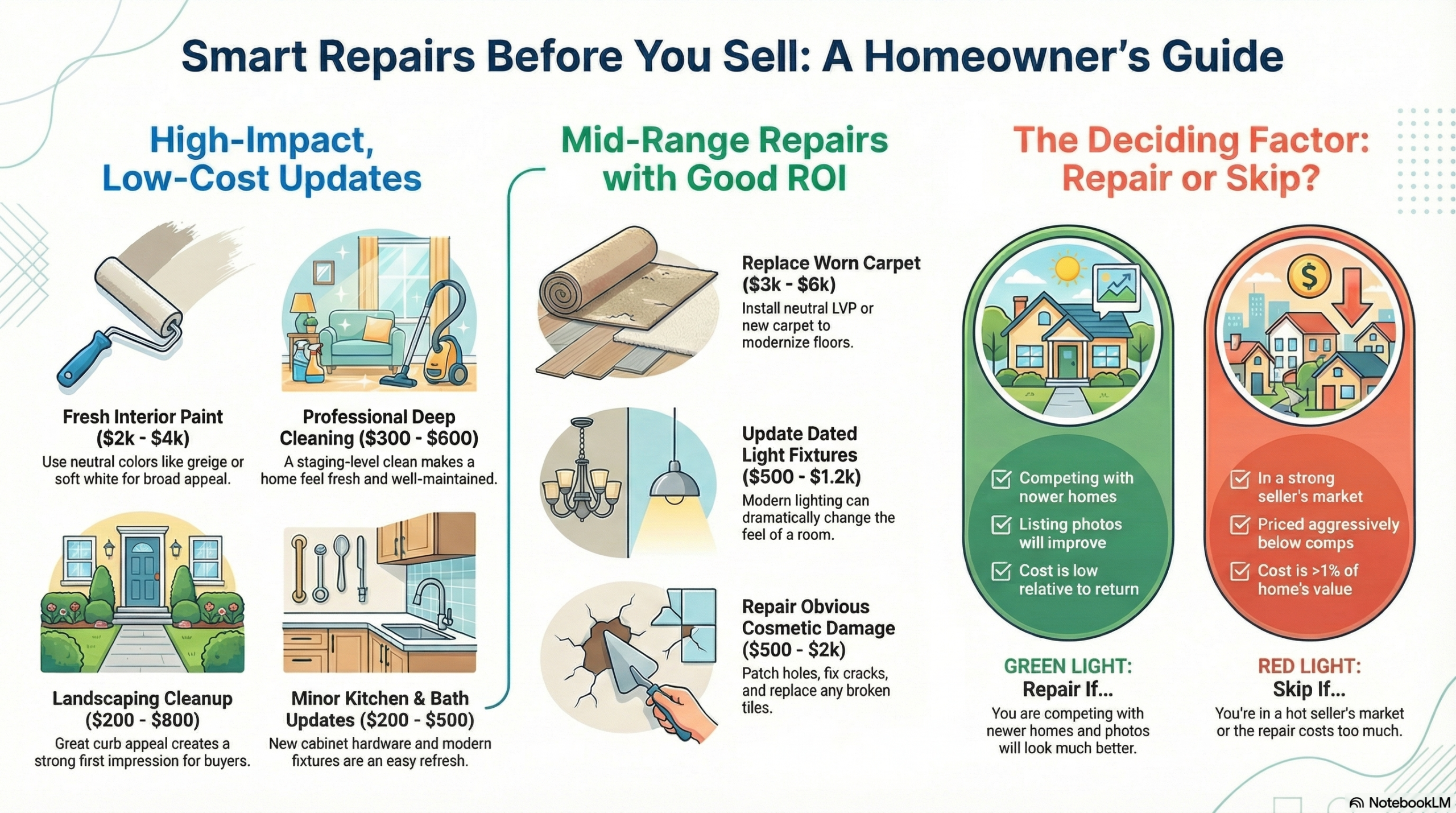
High-Impact, Low-Cost Updates
- Fresh interior paint - Neutral colors (greige, soft white). Cost: $2,000-4,000 for average home
- Deep cleaning - Professional or staging-level clean. Cost: $300-600
- Landscaping cleanup - Mow, edge, trim, mulch. Curb appeal matters. Cost: $200-800
- Minor kitchen/bath updates - New cabinet hardware, modern light fixtures, fresh caulk. Cost: $200-500
Mid-Range Repairs with Good ROI
- Replace worn carpet - Neutral LVP or carpet in bedrooms. Cost: $3,000-6,000
- Update dated light fixtures - Modern fixtures throughout. Cost: $500-1,200
- Repair obvious cosmetic damage - Patch holes, fix cracks, replace broken tiles. Cost: $500-2,000
When These Repairs Make Sense
✓ Your home is priced in a competitive range ($400-600k in Portland metro)
✓ You're competing with newer or recently updated homes
✓ The repair cost is cheap relative to potential return
✓ Your listing photos will look significantly better
When to Skip Them
✗ You're pricing aggressively already (10%+ below comps)
✗ Your home is unique with less direct competition
✗ The repair cost is more than 1% of your home's value
✗ You're in a seller's market with low inventory
"Investing in market-positioning repairs depends on your available time before listing, the competition and upside potential."
Repairs That Don't Make Sense
Don't waste money on these unless there's a specific strategic reason.
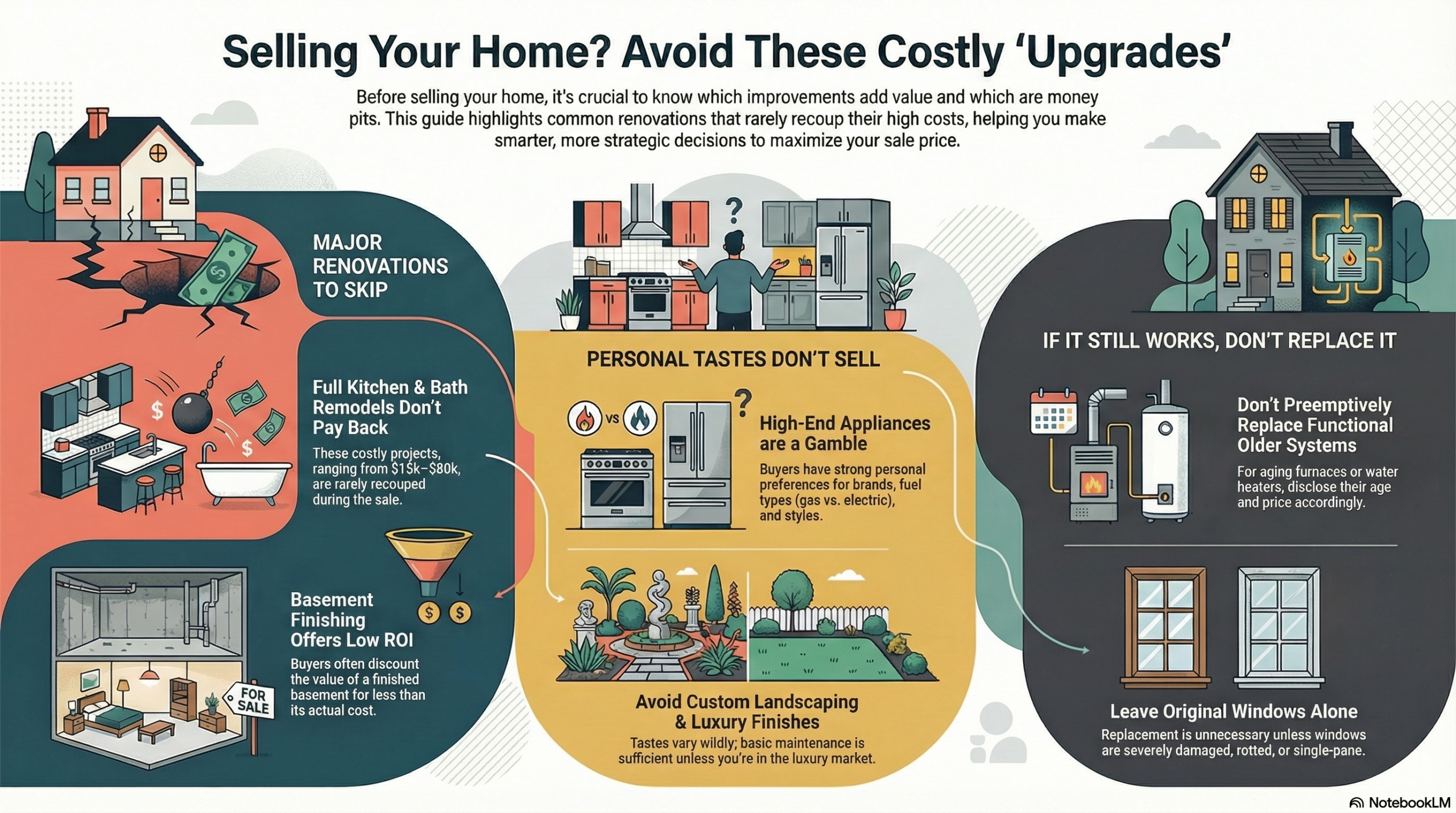
Major Renovations
- Kitchen remodels - Cost: $25,000-$150,000. You won't recoup it.
- Bathroom overhauls - Cost: $15,000-$50,000. Same problem.
- Basement finishing - Low ROI in Portland. Buyers discount unfinished basements less than renovation costs.
Over-Personalized Update
- High-end appliances - Buyers have their own preferences (gas vs. electric, brand loyalty)
- Custom landscaping - Tastes vary wildly. Basic maintenance is enough.
- Luxury finishes - Marble counters, designer tile—wasted money unless you're in the luxury market ($1M+)
Aging Systems That Still Function
- 15-year-old furnace that works - Disclose age, price accordingly, let buyer decide
- Older water heater - Not leaking = not urgent. Offer credit if inspection reveals issue.
- Original windows - Unless severely damaged or single-pane with rot, leave them
Portland Context
Many Portland buyers—especially those in the $400-700k range—WANT to renovate to their taste. An outdated-but-functional kitchen isn't the liability you think it is, especially if you price $20-30k below comparable updated homes.
Buyers would rather have a lower purchase price and renovate on their timeline than pay full price for YOUR taste in finishes.
Better Strategy
Instead of spending $10,000 to replace a 15-year-old furnace that still works, be prepared to offer a $7,000 credit at closing for the buyer to replace it themselves. You save $3,000, buyer gets to choose their preferred system and contractor, everyone wins.
"The best way to handle borderline issues is during negotiations of the Buyer Repair Addendum. Sometimes a buyer won't perceive a problem with that 15 year old furnace ... for those that do, we're prepared to negotiate an equitable solution."
How to Handle Big-Ticket Items: Roof, HVAC and Major Systems
This is where strategy matters most. A $15,000 roof replacement decision could cost you—or save you—thousands.
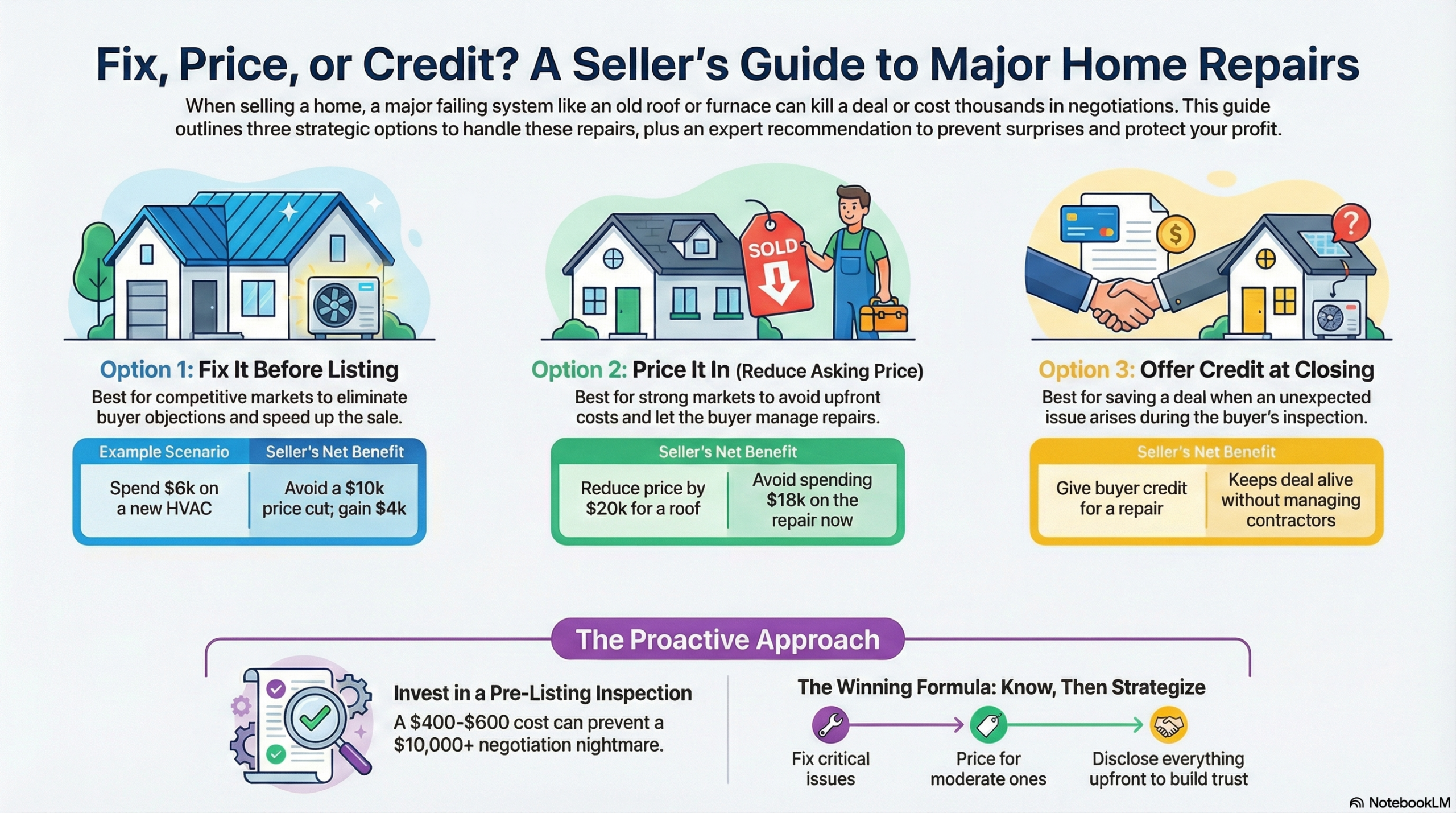
Option 1: Fix it Before Listing
When to do this:
- You're in a competitive price range
- Buyers have multiple choices in your area
- The issue is obvious (curling shingles, rusted furnace)
- You have cash available and time before listing
Why it works:
- Removes buyer objection before it starts
- Speeds up sale process
- Eliminates negotiation leverage for buyers
- Improves inspection outcome
Option 2: Price It In
When to do this:
- Your market is strong with low inventory
- Buyers in your range expect some updates
- Repair cost is known and reasonable
- You'd rather reduce price than manage contractors
Why it works:
- Reduces your upfront costs
- Lets buyer handle it on their timeline
- Pricing reflects reality—no negotiation surprises
- Still attracts buyers if priced right
Option 3: Offer Credit at Closing
When to do this:
- Issue comes up during buyer's inspection
- Buyer wants control over contractor selection
- Repair cost is moderate ($2,000-8,000)
- Keeps deal alive without major price reduction
Why it works:
- Buyer chooses contractor they trust
- You avoid contractor markup
- Keeps transaction moving forward
- Both parties compromise
Portland Market Reality (January 2026):
In Portland's current market, homes under $600k are still competitive—especially in desirable neighborhoods. If your home is in this range with major system issues, you'll likely need to address them OR price aggressively.
Homes $800k+ have a bit more flexibility. Buyers at this price point often expect to renovate and have cash reserves to handle repairs post-closing. It's essential to look at the competition before going on market. Remember ... Portland is now in a balanced market and if your home isn't competitive it won't sell.
My Recommendation:
Get a pre-listing inspection. Know what's coming.
Cost: $500-$800
Value: Prevents Buyer Repair Addendum negotiation nightmares. We know the issues ahead of time and have priced the home to account for those issues. This keeps you as a seller in a strong negotiation position.
Once we know the issues, we strategize:
- Fix the critical stuff
- Price for the moderate stuff
- Disclose everything upfront
- No surprises during buyer's inspection