

If you're a Portland homeowner thinking about selling — whether you're downsizing, relocating, or just ready for something different — here's something worth knowing: homes are selling every day in this market. That part isn't the problem.
The problem is that some sellers are approaching 2026 with a 2021 mindset. And that gap between expectations and reality is where things go sideways.
I've been working with Portland homeowners through this exact transition for years, and I keep seeing the same three mistakes come up. None of them are fatal — but all of them are avoidable if you know what to look for.
The first half 2026 is giving us some useful data points. Not because you need to react to them with urgency, but because understanding current trends helps you make better decisions about your own timeline.
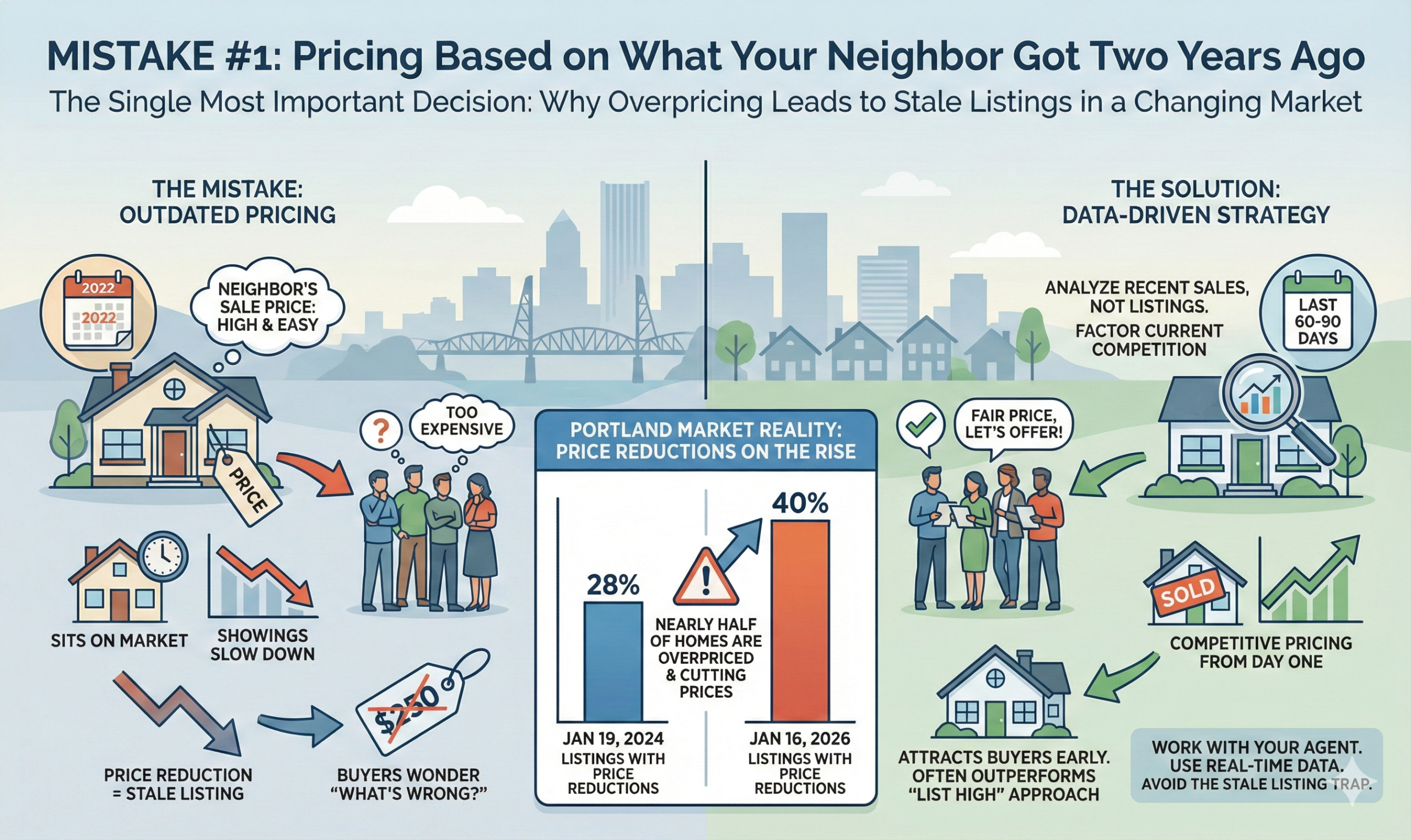
Mistake #1: Pricing Based on What Your Neighbor Got Two Years Ago
This is the big one. Setting your price is the single most important decision you'll make when selling, and it's the one that gets mishandled the most.
Here's what I'm seeing in Multnomah County right now: inventory has grown significantly over the past year. Buyers have more options than they've had in a while — and they're being selective. If a home feels overpriced, buyers don't negotiate. They skip it entirely and move on to the next listing.
The result? The home sits. Showings slow down. Eventually the seller drops the price.
Here's how real this is: nearly half the single-family listings in Multnomah County have taken a price reduction. The chart below updates weekly, so you can see where it stands today — but the trend matters more than any single number. Reductions bottomed near 35% in February and have climbed steadily through spring and summer as inventory built and buyers got more selective. When that share is this high, it means a large portion of sellers priced above what the market would bear and had to correct.
A price reduction isn't the end of the world — but it puts you on the back foot. By the time you drop the price, your listing has already lost that initial wave of buyer attention. It looks stale. Buyers start wondering what's wrong with it. And you often end up settling for less than you would have gotten if the pricing had been right from the start.
What to do instead: Work with your agent to look at what's actually sold in the last 60-90 days — not what's listed, not what sold two years ago. Factor in current competition and what buyers in your price range are actually willing to pay. In Portland's market right now, competitive pricing from day one consistently outperforms the "list high and negotiate down" approach.
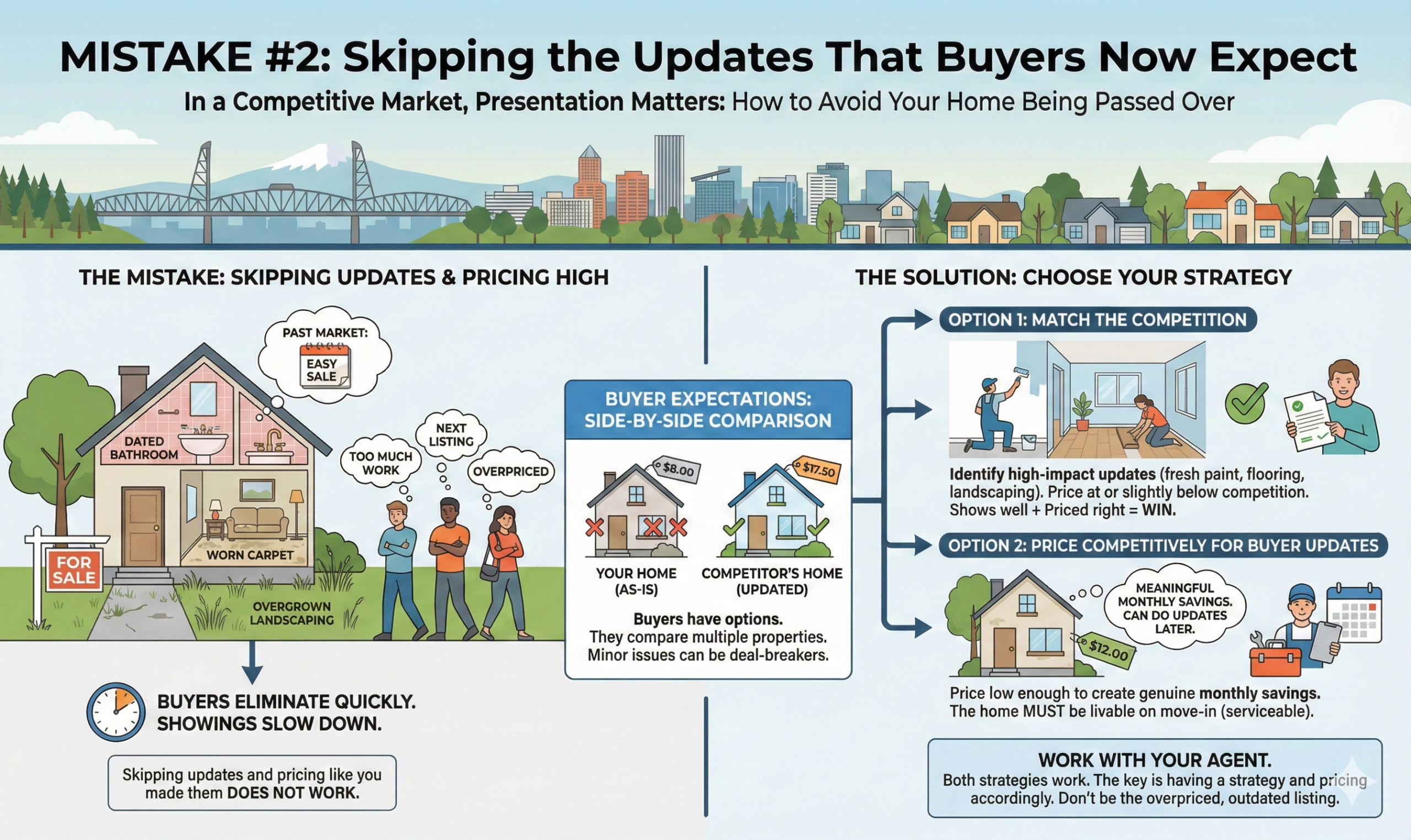
Mistake #2: Skipping the Updates That Buyers Now Expect
A few years ago, you could put a home on the market as-is and still get offers above asking. That was a different market.
Today, buyers are comparing homes side by side. They're walking through three or four properties in a weekend, and the ones that don't show well get eliminated quickly — even if the issues are relatively minor. A dated bathroom, worn carpet, or overgrown landscaping might not seem like deal-breakers to you, but in a market where buyers have options, those things add up.
This doesn't mean you need a full renovation. Far from it. But your home does need a strategy — and you've got two solid options depending on your situation.
What to do instead: Your home is competing with every other listing in your price range. The question is how you want to compete.
Option one: match the competition. Look at what's selling in your area and make sure your home is on par. If comparable homes have fresh paint, updated flooring, and clean landscaping, yours needs to be in that same conversation. Work with your agent to identify the high-impact updates that will put your home on equal footing — then price at or slightly below the competition. When buyers are comparing homes side by side and everything is close, the one that shows well and is priced right wins.
Option two: price competitively and let the buyer do the upgrades. If your home needs work and you'd rather not take on those projects, that's a legitimate strategy — but the price has to make it worth a buyer's while. The goal is to position your home at a price point where a buyer looks at the monthly payment difference and thinks, "I can get into this home for meaningfully less per month, and handle the carpet, paint, or kitchen updates on my own timeline." The savings have to be real — not a token discount, but a genuine gap that shows up in their monthly budget.
The caveat with option two: the home has to be livable on move-in. It can need new carpet. It can need paint. It can even need a kitchen remodel down the road. But it has to be serviceable — a place where a buyer can take possession, move in, and live comfortably while they plan those upgrades over time. A home that needs everything before someone can occupy it is a different conversation entirely.
Both options work. What doesn't work is skipping the updates and pricing as if you made them.
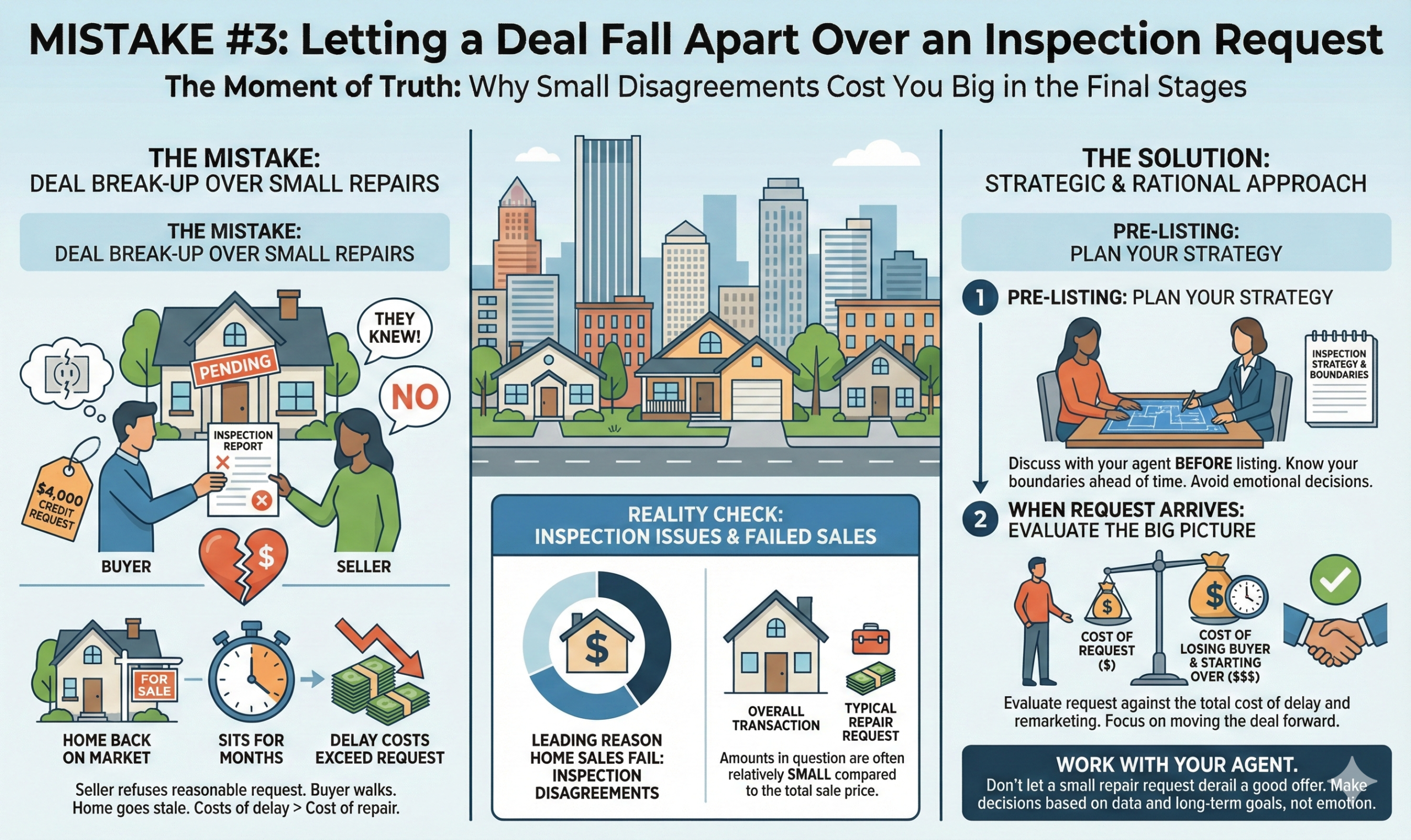
Mistake #3: Treating the Accepted Offer as the Finish Line
Most sellers think of the negotiation as one event. It isn't. There are three, and they come in sequence.
The first is price and terms — the offer itself. This is the one everyone anticipates, and it's the one sellers prepare for.
The second is the repair addendum, after the inspection. The buyer's inspector will find things. Some will be real, some won't, and the buyer will come back asking for repairs, a credit, or a price adjustment.
The third is the appraisal, if it comes up. If the home appraises below the contract price, the gap has to go somewhere — the buyer brings cash, you come down, or you split it. Otherwise the financing doesn't work.
Accepting an offer doesn't end the negotiation. It starts the next one. Sellers who celebrate at mutual acceptance and stop thinking strategically are the ones who get blindsided in week three.
Of the three, the repair addendum is where I see the most deals wobble.
Here's a real scenario: a buyer asks for a $4,000 credit after the inspection turns up some electrical issues. The actual repair cost is maybe $2,500. The seller's instinct is to push back — "they knew what they were getting." But saying no may mean the buyer walks, then the home goes back on market, and it sits for another month or two while the seller starts over. The cost of that delay almost always exceeds whatever the buyer was asking for.
What to do instead:
Before going on market, conduct a home inspection. This enables you to identify potential deal-breakers by either repairing them before listing or acknowledging the problem and pricing the home to account for the issue. This greatly reduces the chance that a repair issue will unwind a sale. See How to Prepare for a Home Inspection to learn about the home inspection process.
In addition, talk with your agent about how you'll handle inspection requests. Know your boundaries ahead of time so you're not making emotional decisions in the moment. This reduces surprizes and when a request comes in, evaluate it against the bigger picture — what does it actually cost you versus what does it cost you to lose this buyer and start over?
Have the appraisal conversation early too. If your pricing is grounded in recent comparable sales, an appraisal gap is unlikely. If you've pushed the number, know before you accept an offer how much of a gap you'd be willing to cover.
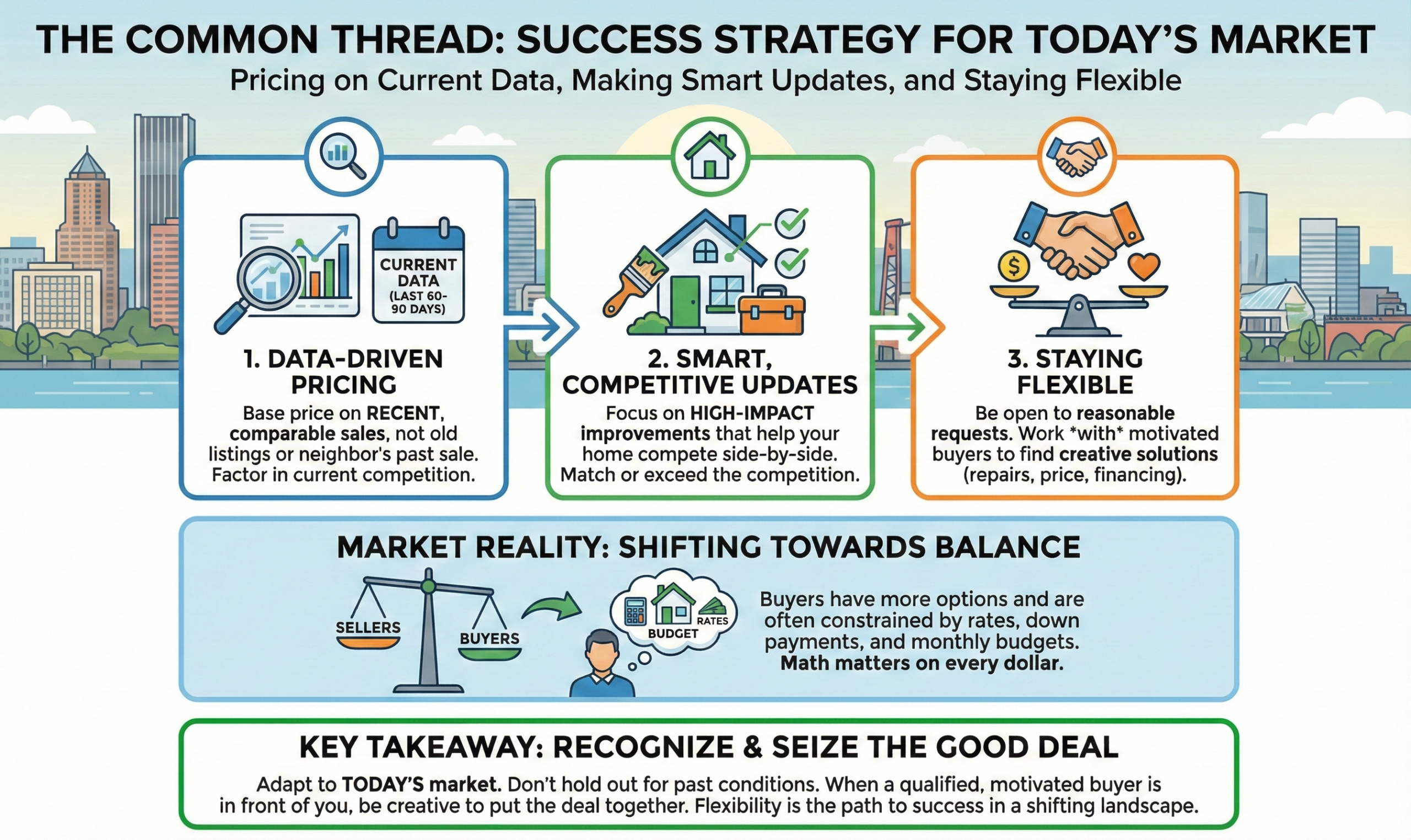
The Common Thread
The sellers who are doing well in this market aren't doing anything extreme. They're pricing based on current data, making smart updates that help their home compete, and staying flexible when reasonable requests come up.
None of this requires you to give your home away or bend over backward. It's about matching your strategy to how buyers are actually behaving right now — not how they were behaving three years ago.
And that flexibility piece deserves one more look, because it matters more than a lot of sellers realize. The reality is, depending on your home's price range, your buyer may be working within a tight budget. Entry-level and step-up buyers want to buy a home — but they're often constrained by rates, down payment limits, and monthly payment thresholds. Even motivated buyers with strong desire and a good agent working for them are doing math on every dollar.
If you've priced your home to the market and you have a qualified, motivated buyer in front of you — someone who clearly wants your home — it's worth being creative to put a deal together. Maybe that means giving more on repairs than you'd prefer. Maybe it means a little more flexibility on price. Maybe it means getting creative on the financing side. None of that feels great in the moment, but keep your eye on the goal: getting your home sold for the best price you can in today's market.
And those last three words matter — in today's market. Portland is shifting. We're moving from what was a strong seller's market toward something much closer to balanced. Buyers have more options and more leverage than they did even a year ago. When a good deal is sitting in front of you, the smart move is to recognize it and work to make it happen — not hold out for conditions that may not come back around.
Want help figuring out how all of this applies to your specific situation? I've put together a free guide that walks through the Portland selling process, including how to price competitively, what updates actually matter, and how to plan for what comes next.
Download it here: Download your Free Seller Guide Here!
Or if you'd rather just talk it through, I do free 20-minute consultations where we can look at your home's position in today's market. No pressure, no sales pitch — just a conversation about what makes sense for you.
Book a time here: Schedule your no obligation consultation here.