

If you're in the early stages of planning a downsize—whether that's happening this year or three years from now—you're probably wondering: What's the market actually doing right now? And how should that affect my planning?
The start of 2026 is giving us some useful data points. Not because you need to react to them with urgency, but because understanding current trends helps you make better decisions about your own timeline.
The Big Picture: A More Functional Market
Here's what we're seeing nationally as of late January:
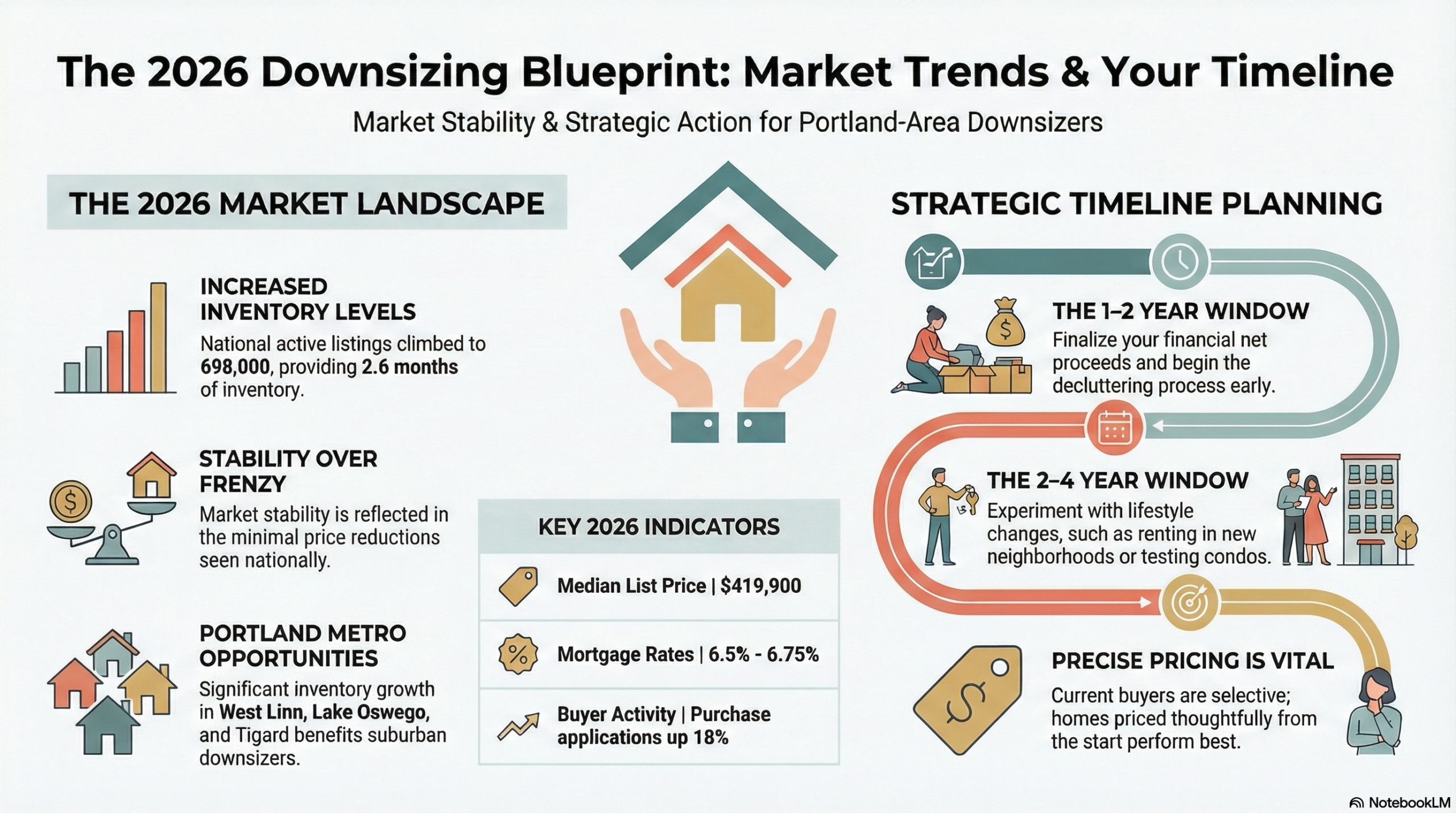
More homes available: Active listings have climbed to nearly 698,000 homes, providing about 2.6 months of inventory. That's still a seller-favorable market by historical standards, but it's a significant improvement from the extreme shortages we've experienced in recent years.
Steady buyer activity: Pending home sales are running at 56,252 weekly—up consistently throughout January. Mortgage purchase applications increased 18% compared to last year, suggesting buyers are actively looking.
Stable pricing: The median list price sits at $419,900 nationally, and here's what's interesting: despite more inventory becoming available, we're not seeing an increase in price reductions. That tells us current pricing is reasonably aligned with what buyers are willing to pay.
What This Means for Portland Metro Downsizers
Let's translate these national trends into what matters for your situation:
If You're Planning to Sell in 2026-2027
The combination of steady buyer demand and improving inventory suggests we're moving toward a more balanced market. For you, this means:
Realistic pricing matters more than ever: In the extreme seller's markets of 2021-2022, homes often sold regardless of pricing strategy. Today's market rewards homeowners who price thoughtfully from the start.
Preparation time is valuable: With more options available, buyers can be more selective. Homes that show well and are priced accurately tend to perform better than those that aren't.
Spring timing looks reasonable: If selling this spring aligns with your broader plans, current indicators suggest normal seasonal activity without the frenzy of recent years.
If You're Planning 2-4 Years Out
Longer planning timelines give you different considerations:
Use this time to observe: Markets cycle. Watching how 2026 unfolds gives you valuable context for understanding what "normal" looks like post-pandemic.
Focus on what you can control: Property condition, decluttering, and understanding your financial position matter regardless of market conditions. These are productive uses of a longer timeline.
Don't try to time the top: The question I hear most often is "Should I wait for prices to go higher?" The data suggests we're in a period of relative stability. Waiting specifically to capture a higher price often adds stress without guaranteeing a better outcome.

The Portland Metro Context
While national data provides helpful context, our local market has its own characteristics:
Portland Metro inventory levels have improved more significantly than many West Coast markets, particularly in suburban areas like West Linn, Lake Oswego, and Tigard. That's relevant if you're downsizing from a larger suburban home to something more manageable.
Buyer activity in the 50+ demographic remains strong, particularly for well-maintained homes in walkable neighborhoods or those with single-level living. If you're buying after you sell, understanding where demand is concentrated helps you identify realistic options.
What About Mortgage Rates?
Housing demand historically strengthens when mortgage rates approach 6%. We're in that zone now—rates are hovering around 6.5-6.75% for well-qualified buyers.
If you're buying after selling, current rates are worth factoring into your budget planning. If you're downsizing to eliminate a mortgage entirely, rates matter less to your personal equation.
Making This Data Useful
Here's how to think about these trends practically:
If you're 1-2 years out:
Start getting your financial picture clear: what you'll net from your sale, what you can comfortably spend on your next home. Begin the decluttering process in earnest—this consistently takes longer than people expect. Watch the market casually, but don't obsess over monthly fluctuations.
If you're 2-4 years out:
Use this time to experiment with your next lifestyle—rent in an area you're considering, downsize your belongings gradually, test whether condo living appeals to you. Build relationships with professionals you'll need: financial advisors, estate planners, real estate consultants who understand longer timelines. Avoid the temptation to over-improve your current home specifically for resale.

The Bottom Line
The early 2026 market data suggests we're in a period of relative stability—not the chaos of 2021-2022, but not a collapsing market either.
For someone planning a downsize, stability is actually helpful. It allows you to make decisions based on your life circumstances rather than reacting to dramatic market swings.
Your timeline should be driven by what makes sense for your life: your health, your finances, your readiness to make a change. Market conditions provide context for those decisions, but they shouldn't be the primary driver.
If you're working through these questions and want to talk through your specific situation, that's what I'm here for. The best downsizing decisions come from understanding both the market context and your personal priorities—not from rushing because someone told you "now is the time."
About Your Boomer Broker:
I specialize in helping Portland Metro homeowners plan and execute downsizing moves on their timeline, not the market's. If you're in the early planning stages, let's talk about what a realistic timeline looks like for your situation.